Position
North Papua
Facing the Pacific Ocean
Geography, community, climate, and Biak culture in one page.
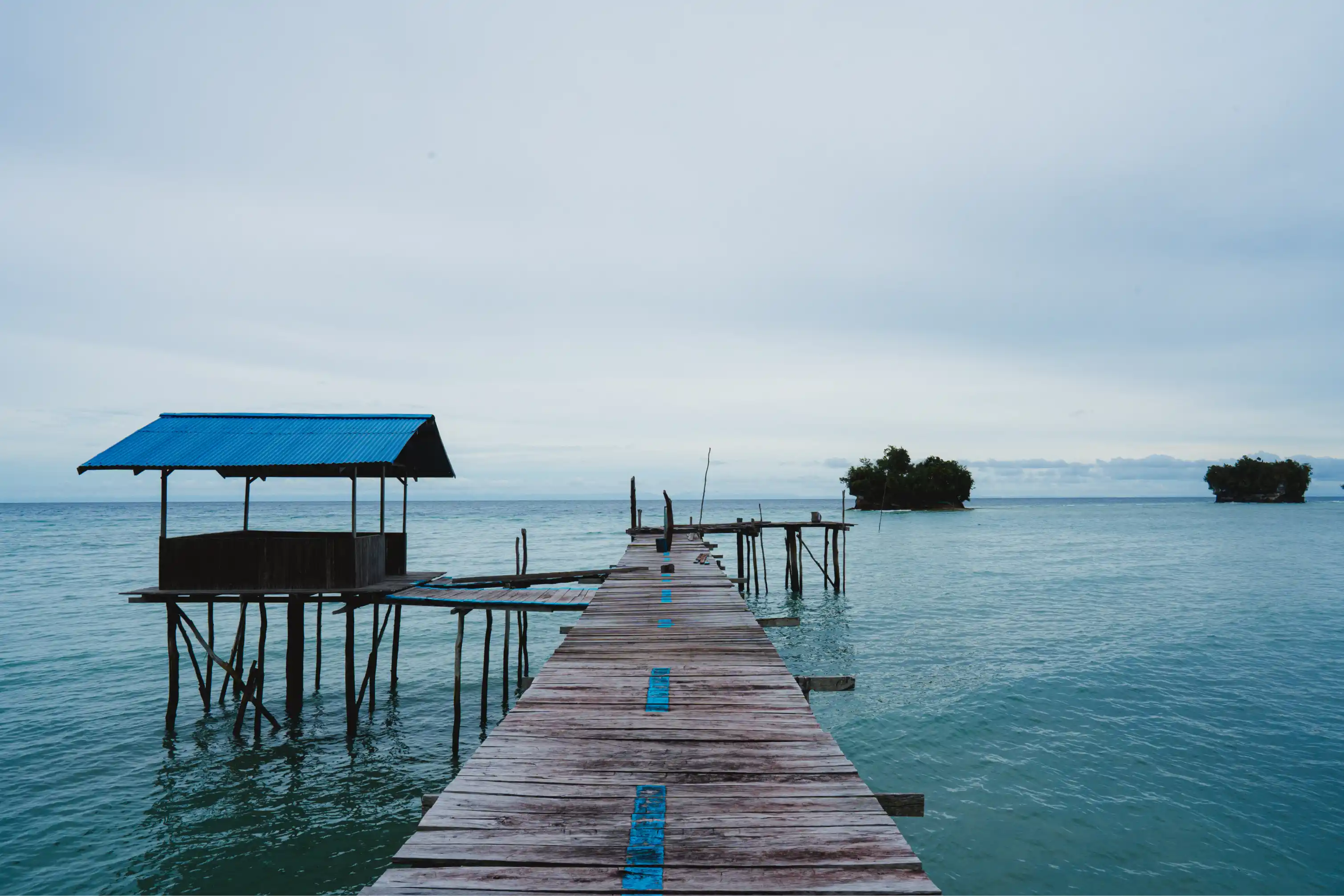
Biak Island anchors daily life in Biak Numfor: town space, coastal villages, forest, karst, and sea routes facing directly toward the Pacific Ocean.
Biak Numfor is read through Biak Island, Numfor Island, the Padaido Islands, and smaller islands that shape mobility, work, food, and cultural memory.
Position
North Papua
Facing the Pacific Ocean
Main islands
Biak and Numfor
Two regional anchors
Island group
Padaido
Marine and conservation space
Biak's natural setting shapes coastal life, from sea routes to village patterns and inter-island travel.
Biak Island has low coasts, layered inland terrain, and steep hills. Numfor is comparatively gentler.
Regional elevation
0-920 masl
From coast to hills
Coast
0-5 m
Low zone along the island edge
Inland Biak
10-600 m
More layered terrain
Steep hills
75%
Large share of Biak Island
Rainfall is relatively even throughout the year, so seasons are not sharply separated. Warm and humid air shapes inter-island travel rhythms.
Temperature
21-32 C
Tropical daily range
Average
25.5 C
Moderately warm
Humidity
85%-88%
Strong maritime influence
Rainfall
Even
Seasons are less distinct
Biak Numfor sits in an active geological zone, including the Sorong Fault and the meeting area of the Pacific, Australian, and Eurasian plates.
Biak Kota concentrates services and modern daily life. Other areas keep a more dispersed island pattern close to the sea.
The density contrast helps visitors understand why Biak cannot be read as one town center only.
Regency
55.61/km2
Average Biak Numfor density
Biak Kota
1,818/km2
Service and modern life center
Places of worship show a layered spiritual life and an inclusive social landscape.
Places of worship chart
The narrative positions local communities as the main actors: teaching, welcoming, dancing, cooking together, and keeping memory alive.
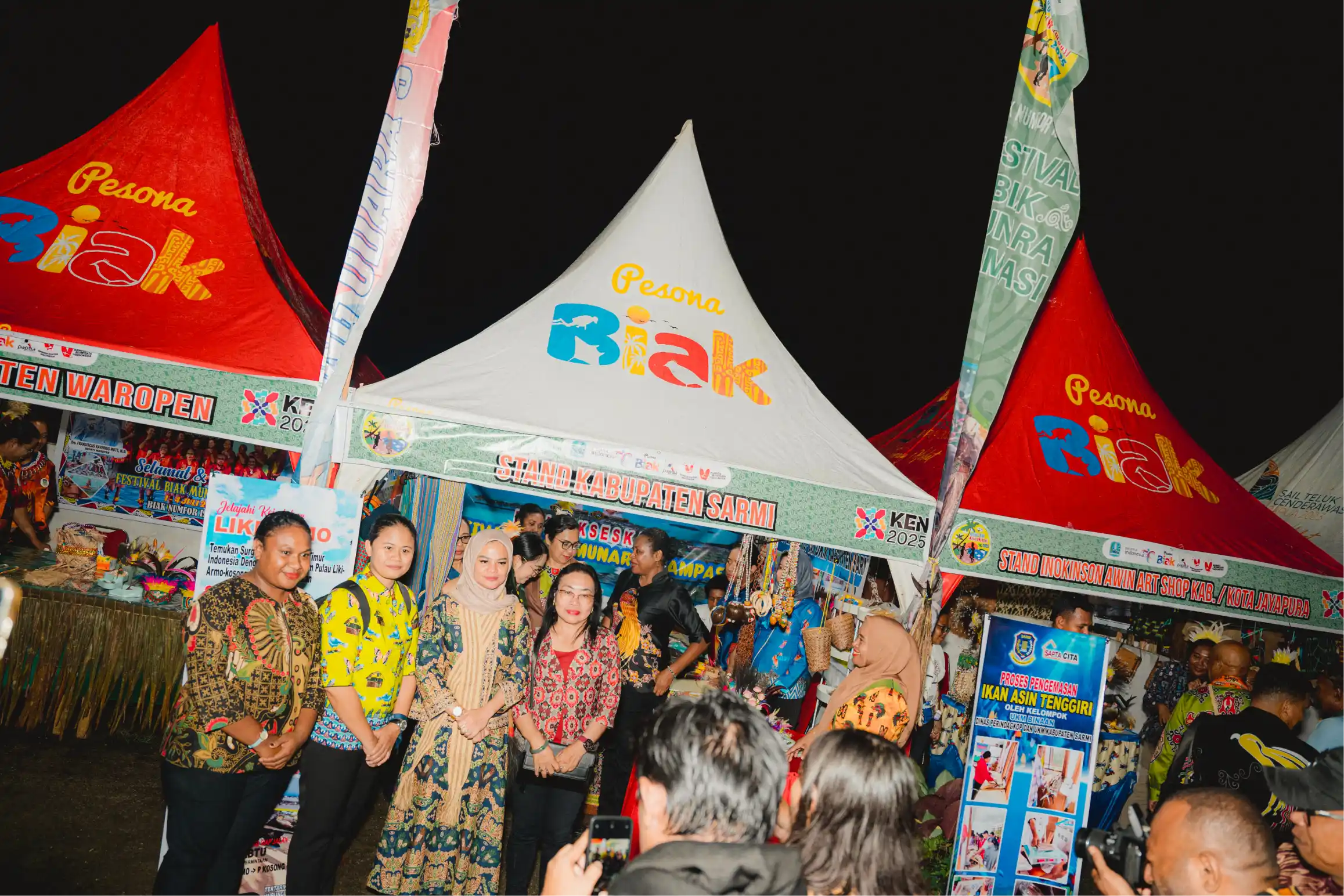
Regeneration
An annual space for local language, songs, socio-drama, flute and drum music, cultural school, and communal meals.
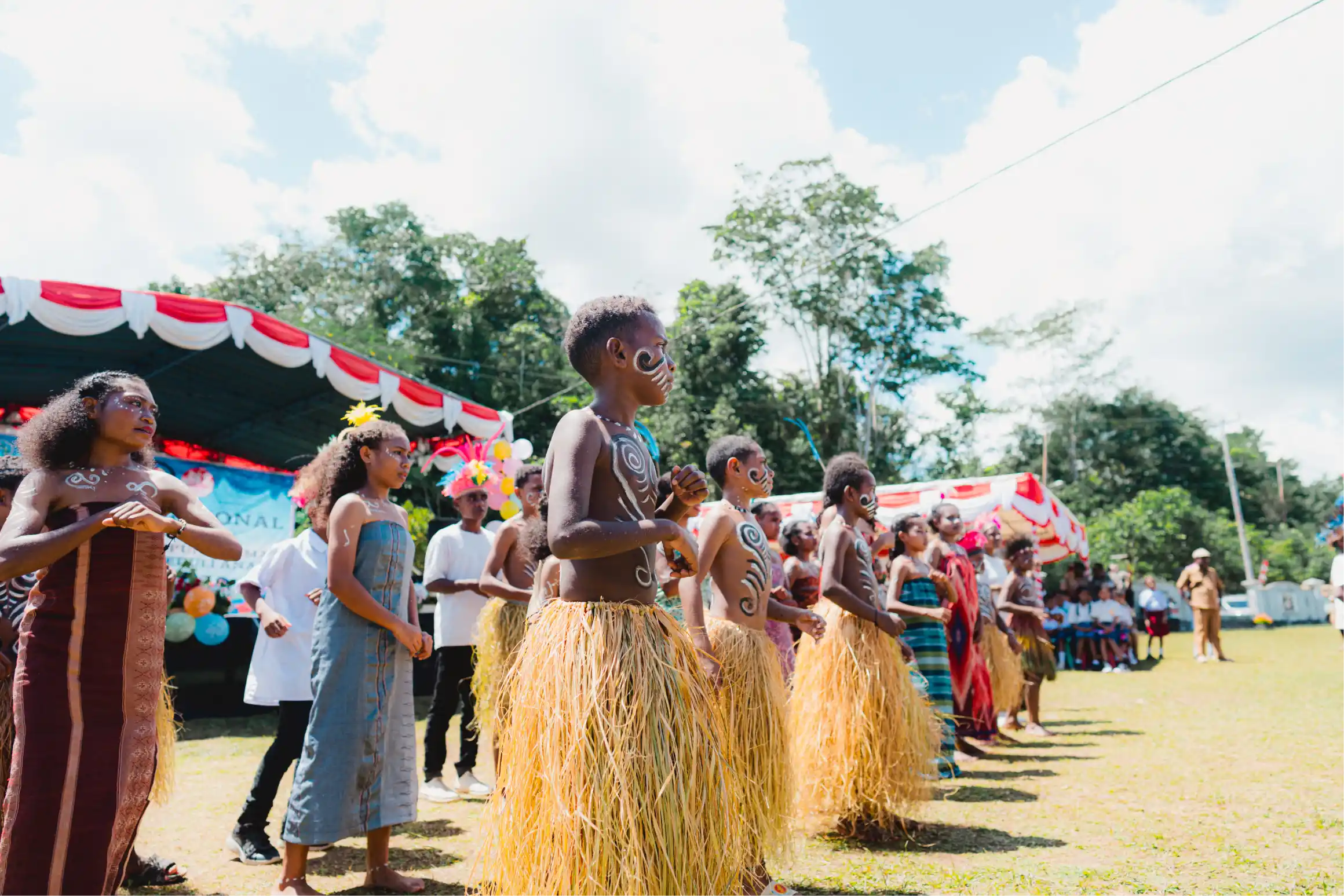
Cosmology
A sacred dance connecting humans, the sea, the universe, and the spiritual world.
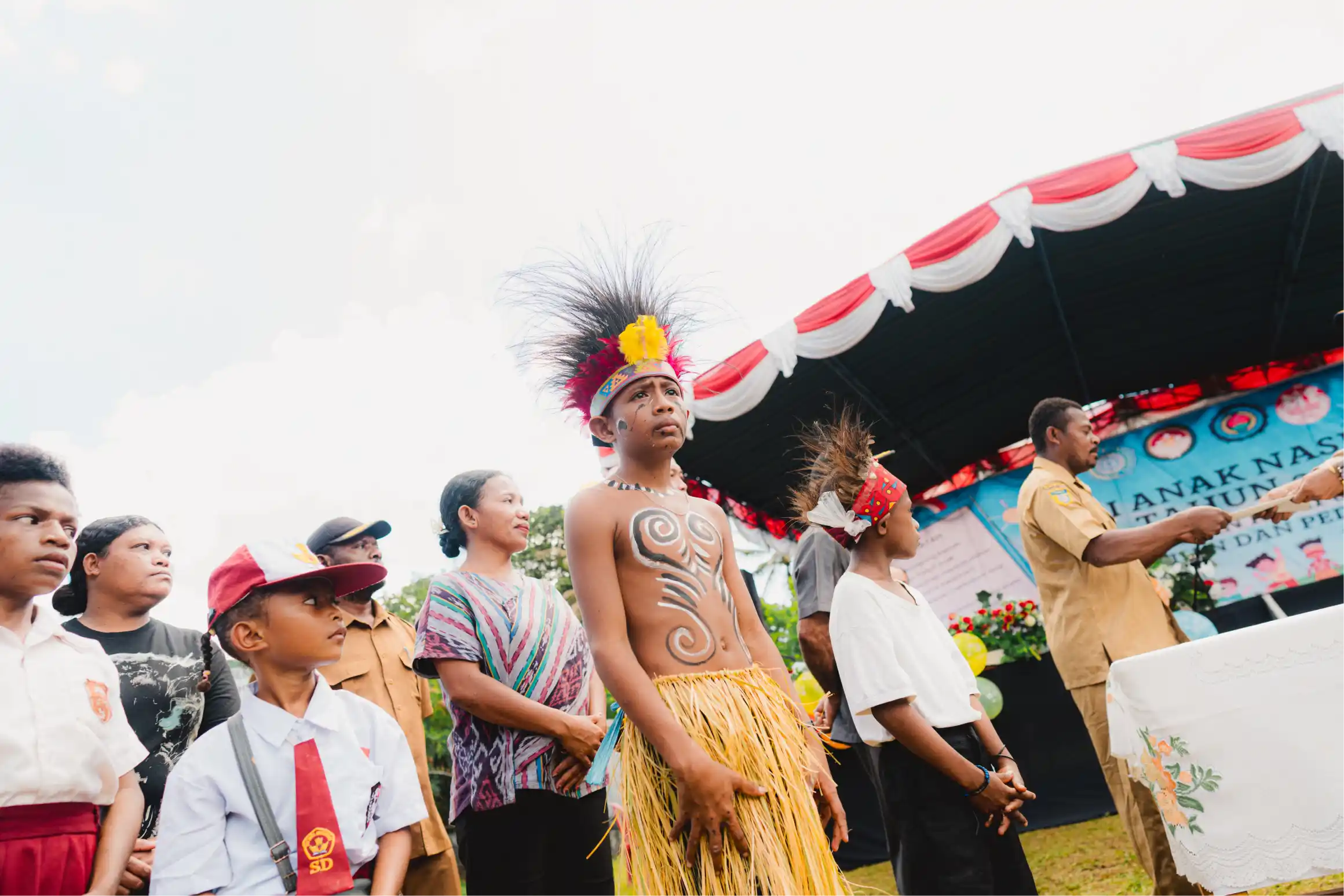
Adaptation
A modern social dance carrying youth energy, history, and friendship into movement.
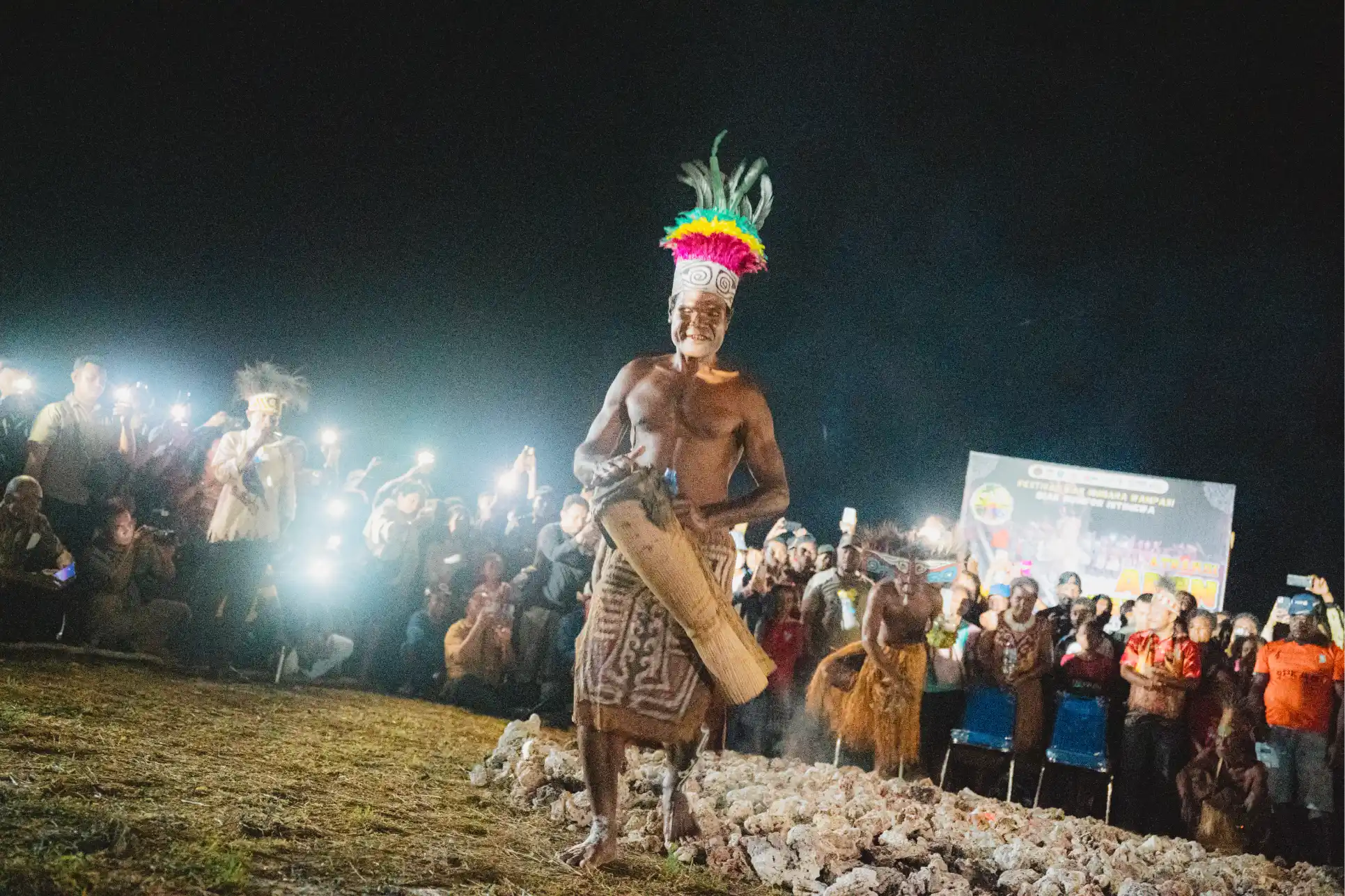
Social ritual
Hot-stone tradition and communal meals are framed as ancestral knowledge, gratitude, welcome, and restored relationships.
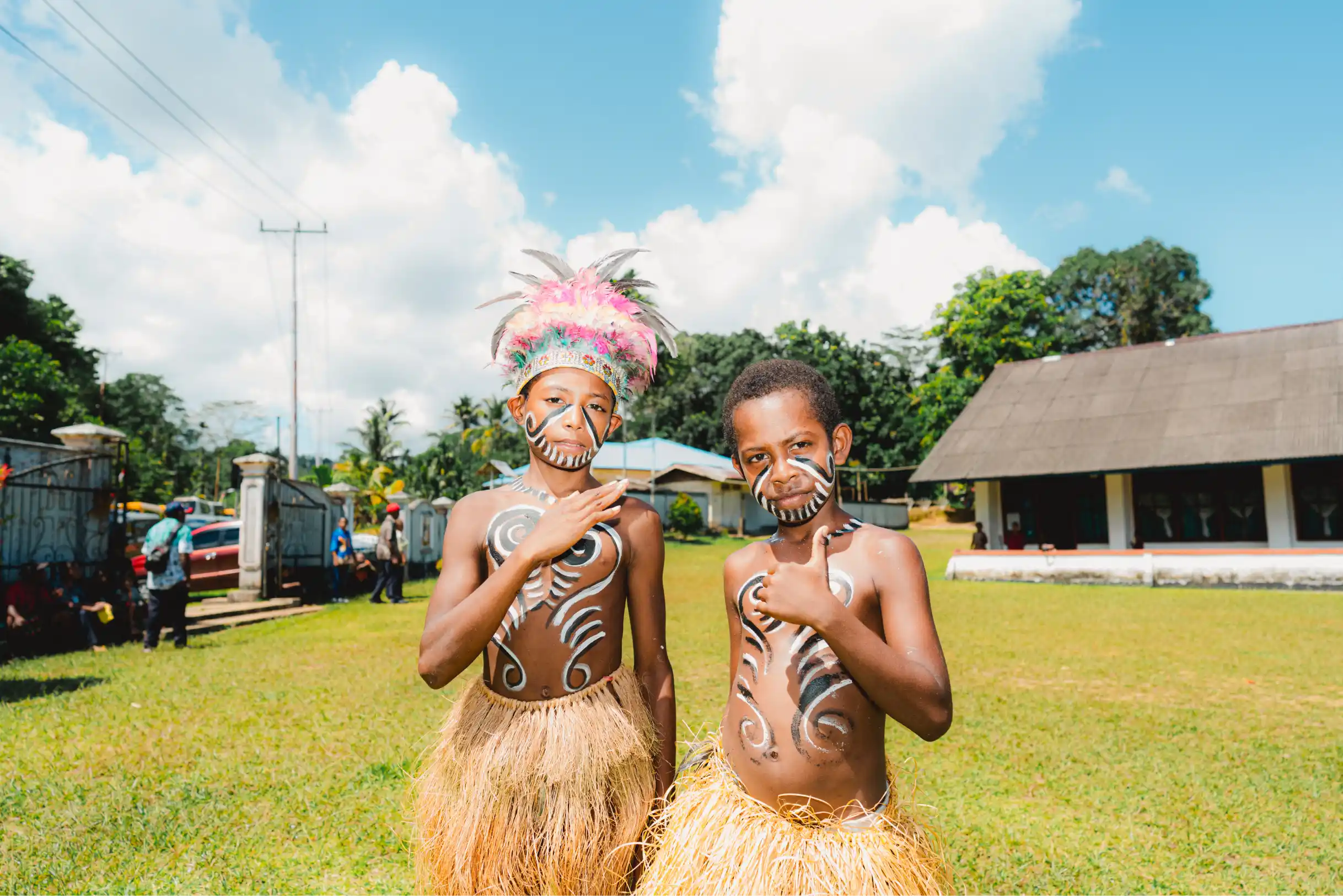
Return
A welcoming tradition for relatives returning from migration, closed with gratitude and communal meals.
These values keep data, society, and culture from feeling separated.
Sea
Mobility, food, and cosmology in an island society.
Return
Mansorandak reads migration as a relationship that returns home.
Harmony
Places of worship data becomes evidence of a layered spiritual landscape.
Memory
Yospan shows how changing times enter movement and music.
Regeneration
Festival and cultural school keep local language, music, and knowledge active.
The travel page focuses on destinations, access, and itineraries without repeating the regional data here.